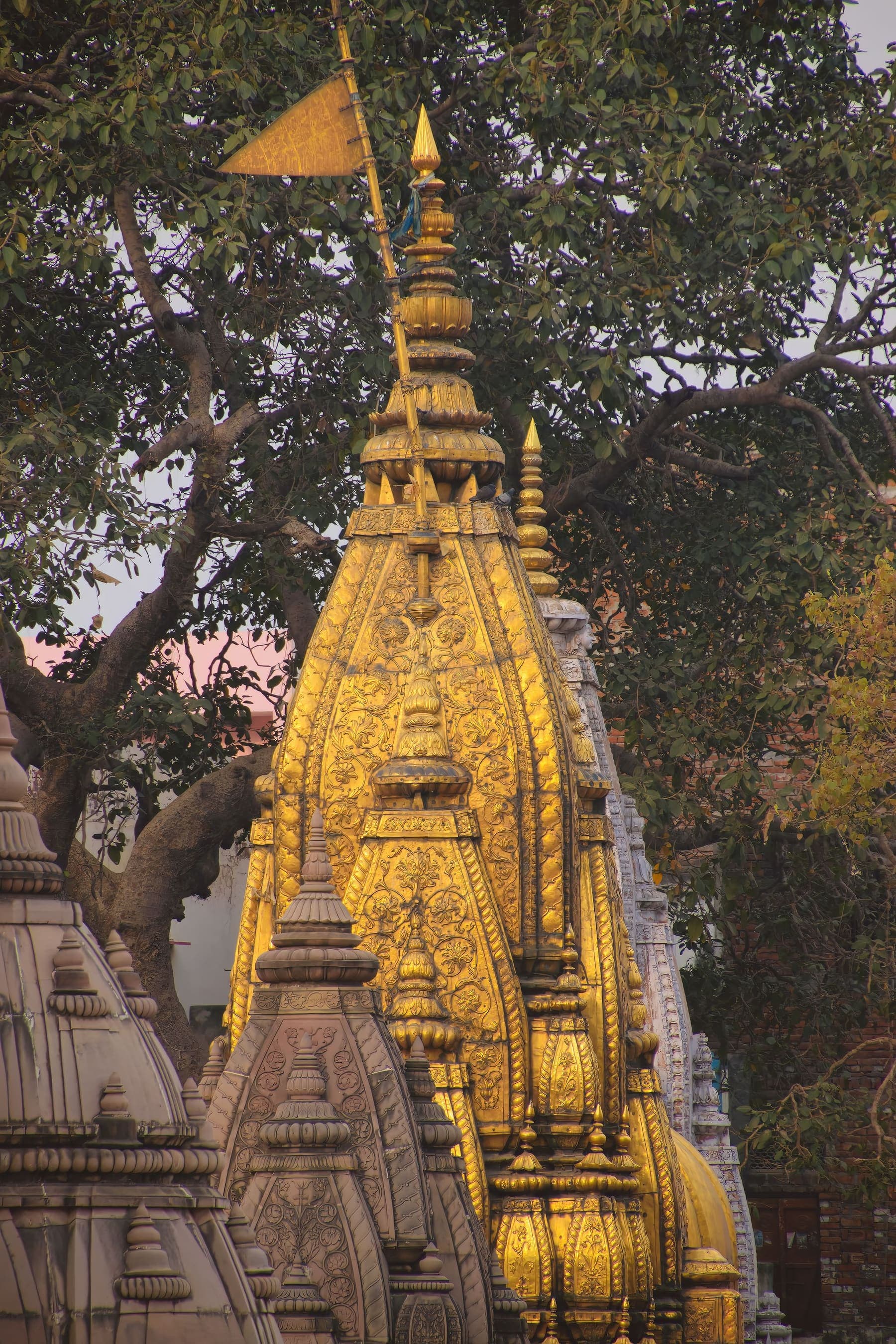
The golden spire of Vishwanath, the Lord of the Universe, is the heart of Kashi. A practical guide to darshan: how the day is divided, how the tickets and gates work, and what to leave behind.
The short answer
Kashi Vishwanath Temple opens before dawn for the Mangala Aarti at 3 AM and closes after the Shayan Aarti at about 11 PM, with darshan paused during each of its five aartis. Sugam Darshan, the paid shorter queue, costs about ₹250 to ₹300 and is booked on the temple trust's website. Phones, bags and leather are not allowed inside; leave them in the lockers at the gates.
Key points
- Open about 3 AM to 11 PM, paused for aartis
- Mangala Aarti at 3 AM: book well ahead
- Sugam Darshan: about ₹250–300, online
- No phones, bags or leather inside
Every lane in the old city seems to lead, sooner or later, to Vishwanath. It is the reason Kashi is called the city of Shiva: one of the twelve Jyotirlingas, the places where Shiva is said to have appeared as an endless column of light, and for many Hindus the most sacred temple in India. People come here to see and be seen by the god, which is what darshan means. Some come once in a lifetime; some neighbours come every morning before work.
A visit is simple once you know how the temple works, and bewildering if you don't. This guide explains the history in brief, how the day is divided by the aartis, the ticket options, the gates and the rules, and the hours when you can stand before the linga without being swept past it.
A temple rebuilt many times
A temple to Vishwanath has stood in Kashi for well over a thousand years, and it has been destroyed and rebuilt several times. The temple that stood before the present one was demolished in 1669 on the orders of the emperor Aurangzeb, and the Gyanvapi mosque was built on part of its site; the mosque still stands beside the temple today. For more than a century the linga was worshipped in a modest shrine nearby.
The present temple was built in 1780 by Ahilyabai Holkar, the Maratha queen of Indore, who also endowed temples and ghats across India. In the 1830s Maharaja Ranjit Singh of Punjab gave the gold that plates its spire and dome, which is why visitors still call it the Golden Temple of Varanasi. In December 2021, the Kashi Vishwanath Dham corridor opened, clearing a broad, paved passage from the temple down to the Ganga at Lalita Ghat, with courtyards, galleries and a temple complex around it.
Timings and the five aartis
The temple opens in the small hours and closes around 11 PM. Its day is divided by five aartis, and general darshan pauses while each is performed. Each aarti, except the last, needs its own ticket, booked separately from darshan.
- Mangala Aarti
- Time (approx.)3:00–4:00 AM
- TicketAbout ₹500
- What it isThe waking of the god before dawn; the most sought after
- Bhog Aarti
- Time (approx.)11:15 AM–12:20 PM
- TicketAbout ₹300
- What it isThe midday offering of food
- Saptarishi Aarti
- Time (approx.)About 7:00–8:15 PM
- TicketAbout ₹300
- What it isPerformed by seven priests, after the seven sages
- Shringar / Bhog Aarti
- Time (approx.)About 9:00–10:15 PM
- TicketAbout ₹300
- What it isThe adornment of the linga at night
- Shayan Aarti
- Time (approx.)About 10:30–11:00 PM
- TicketFree
- What it isThe god is put to rest; the last of the day
| Aarti | Time (approx.) | Ticket | What it is |
|---|---|---|---|
| Mangala Aarti | 3:00–4:00 AM | About ₹500 | The waking of the god before dawn; the most sought after |
| Bhog Aarti | 11:15 AM–12:20 PM | About ₹300 | The midday offering of food |
| Saptarishi Aarti | About 7:00–8:15 PM | About ₹300 | Performed by seven priests, after the seven sages |
| Shringar / Bhog Aarti | About 9:00–10:15 PM | About ₹300 | The adornment of the linga at night |
| Shayan Aarti | About 10:30–11:00 PM | Free | The god is put to rest; the last of the day |
Times and prices from the temple trust and recent published guides; they shift with the season and on festival days, and are raised in the month of Shravan. Confirm on shrikashivishwanath.org before you go.
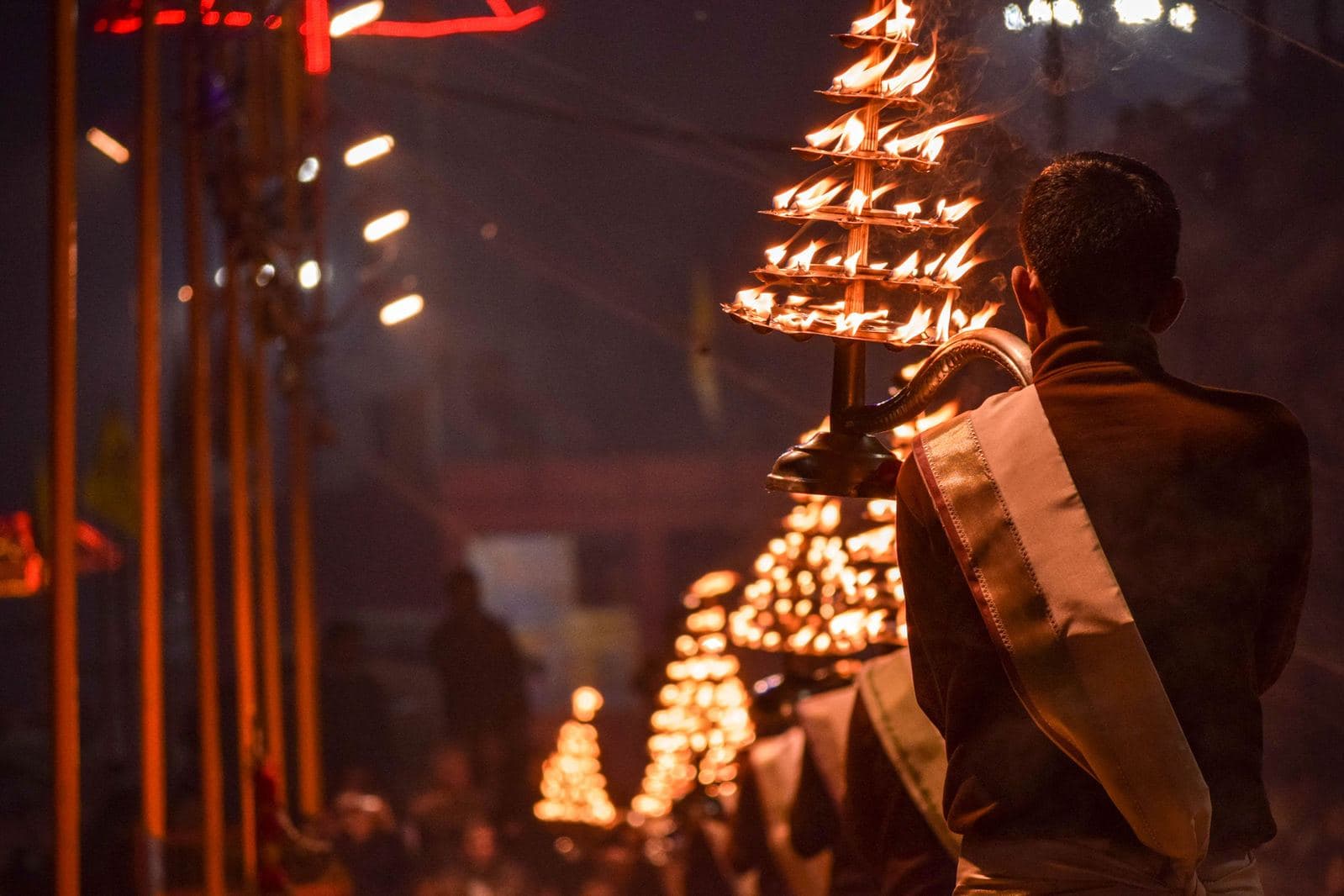
The Mangala Aarti is the one to see if you can. In the dark before dawn, the sanctum is lit with lamps, bells ring and the priests wake and bathe the god. It has a small number of places and sells out, often weeks ahead in season; book as soon as your dates are fixed, and be at the gate well before 3 AM, as entry closes before the aarti begins.
Sugam Darshan and the ways in
There are three ways to have darshan. The general queue is free and open to all; outside festivals it can take from half an hour to several hours. Sugam Darshan is a paid entry through a shorter line, at about ₹250 to ₹300 per person depending on the option and the season; it is booked on the temple trust's official website, and recent guides say it comes with use of a locker. It is not offered during aartis and is often suspended on the busiest days. Finally, the aarti tickets above let you attend a ceremony inside the sanctum courtyard.
- 1Book online on shrikashivishwanath.org: choose Sugam Darshan or an aarti, the date and the slot, and enter the ID you will carry.
- 2Arrive early, at least 30 to 45 minutes before your slot, to leave time for the lockers and the security checks.
- 3Leave your things at a locker counter near your gate: phone, bag, belt, wallet if it is leather.
- 4Carry only your ID, the booking confirmation (printed, since you cannot take your phone in) and a little cash for offerings.
- 5Go through security; there are several checks on the approach.
- 6Take darshan: in the queue you will have a few seconds before the linga, longer at quiet hours.
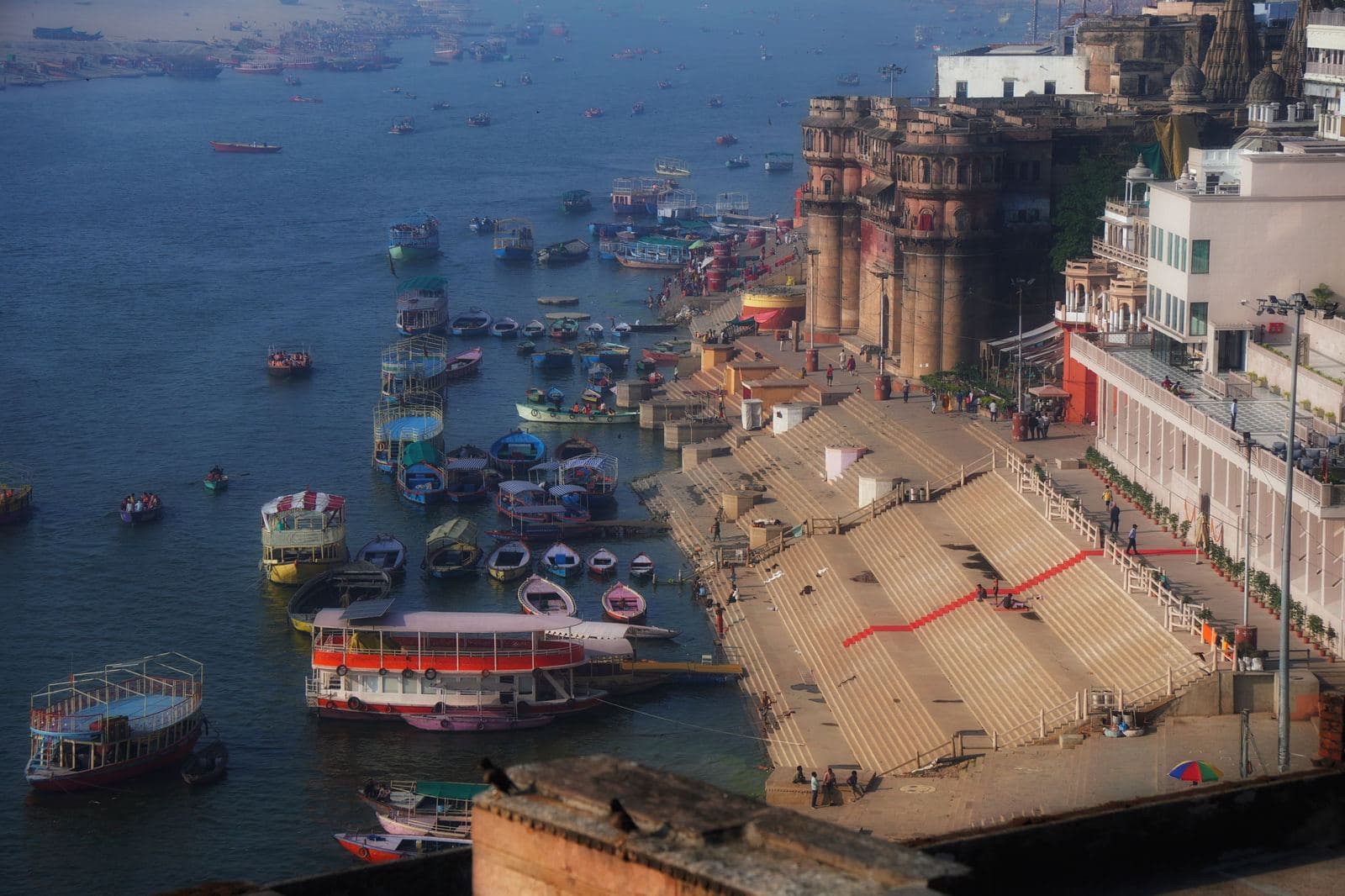
The temple can be approached from several gates in the old city and from the river through the corridor. Gate 4 is the usual reference point for paid darshan and has the temple's help desk nearby; the Dhundhiraj and Saraswati gates lead in from the market side, and the corridor brings you up from Lalita Ghat. If you are staying on the ghats, coming up from the river is the most beautiful approach.
What you can and can't take in
Security is tight. Mobile phones, cameras, smartwatches, power banks, bags and leather items are not allowed past the entry gates, and you will be checked several times. Lockers are available at the gates. Photography is not allowed inside the temple. Flowers, milk and other offerings can be bought from the shops along the approach, but they are not required; your presence is enough.
What to wear
Dress modestly: shoulders and knees covered for everyone, and nothing tight or revealing. Indian clothes are welcome but not required. You will take your shoes off before entry, so wear something you can slip off and on quickly, and leave good shoes at your hotel if you can. Touching the linga, called sparsh darshan, is allowed only at certain times and is often suspended on busy days; ask at the help desk on the day.
When to go, and when to avoid
- Weekday mornings, after the Mangala Aarti
- The quietest hours of the day
- Early afternoon on weekdays
- Usually manageable
- Evenings and weekends
- Busy
- Mondays, Shiva's day
- Very busy
- Mondays in Shravan (July–August)
- The busiest days of the year; passes often cancelled
- Mahashivratri, Dev Deepawali, New Year
- Queues of many hours; special arrangements
| Time | Crowds |
|---|---|
| Weekday mornings, after the Mangala Aarti | The quietest hours of the day |
| Early afternoon on weekdays | Usually manageable |
| Evenings and weekends | Busy |
| Mondays, Shiva's day | Very busy |
| Mondays in Shravan (July–August) | The busiest days of the year; passes often cancelled |
| Mahashivratri, Dev Deepawali, New Year | Queues of many hours; special arrangements |
In 2024 the temple cancelled all daily passes on the Mondays of Shravan to manage the crowds, and it has done similar things on other major festivals. If your dates fall on one of them, plan for the general queue and a long wait, or move your darshan to another day.
Around the temple
Allow time for the shrines around Vishwanath, which most visitors miss. Annapurna, the goddess who feeds Kashi, has her temple a few steps away; her golden image is shown to the public only for a few days around Diwali. Vishalakshi, one of the Shakti Peethas, is a short walk towards the river. And Kaal Bhairav, the fierce guardian of the city, is traditionally visited to ask his permission to stay in Kashi. Many families visit all four on the same morning.
For the rest of your stay, read our guides to the Ganga Aarti and how many days to spend in Varanasi. On our Kashi in Four Days journey we book darshan for you, arrange the lockers and walk you to the gate.
Questions people ask
- What time does Kashi Vishwanath Temple open?
- Before dawn, for the Mangala Aarti at 3 AM, and it closes after the Shayan Aarti at about 11 PM. Darshan pauses during each of the five daily aartis.
- How much is Sugam Darshan at Kashi Vishwanath?
- About ₹250 to ₹300 per person, depending on the option and season. Book it on the temple trust's official website, shrikashivishwanath.org.
- How do I book the Mangala Aarti?
- Online on the temple trust's website, as early as you can; places are limited and sell out. Tickets cost about ₹500, and you should be at the gate well before 3 AM.
- Can I take my phone into Kashi Vishwanath?
- No. Phones, cameras, smartwatches, bags and leather items are not allowed; leave them in the lockers at the gates and carry a printed booking.
- What is the best time for Kashi Vishwanath darshan?
- Weekday mornings after the Mangala Aarti are the quietest. Avoid Mondays, the Mondays of Shravan and Mahashivratri if you dislike crowds.

About this guide
Written for the WanderMate Journal by our team in Varanasi, where we plan and run journeys along the Ganga. We check facts against official and published sources, listed below, and revise guides when timings, prices or dates change. Last updated 14 October 2026.
Spotted something out of date? Tell us.
Sources