Varanasi is a different city in every season: luminous in Kartik, wrapped in fog in January, burning in May and swollen with the river in August. Here is what each month is really like, and which one suits your trip.
The short answer
The best time to visit Varanasi is from October to March, when days are dry and between about 22°C and 33°C. November and February are the most comfortable months; November also brings Diwali and Dev Deepawali. April to June is fiercely hot, above 40°C in May, and from July to September the monsoon can flood the ghats and stop boat rides.
Key points
- Best overall: November and February
- Festival peak: late October to November
- Hottest: May and June, often above 40°C
- Monsoon: July to September, boats may stop
Ask anyone in Varanasi when to come and they will ask you a question back: what do you want to see? The city's year is set by two clocks. One is the weather, which swings from foggy winter mornings to some of the hottest days in India and then to a monsoon that lifts the Ganga over the steps. The other is the Hindu calendar, which fills certain months with festivals and leaves others quiet. The best time to visit is where the two meet for you.
For most travellers that means October to March. Below is the year month by month: the temperature, the rain, what is happening on the ghats, and who each season suits.
Varanasi weather at a glance
- January
- Day / night22° / 9°C
- RainAbout 15 mm
- What it's likeCool, often foggy mornings; cold on the river at dawn
- February
- Day / night27° / 12°C
- RainAbout 20 mm
- What it's likeClear, mild and bright; one of the best months
- March
- Day / night33° / 17°C
- RainAbout 10 mm
- What it's likeWarming quickly; Holi and the last easy weeks
- April
- Day / night39° / 23°C
- RainUnder 10 mm
- What it's likeHot and dry; dawn and dusk only
- May
- Day / night41° / 27°C
- RainAbout 10 mm
- What it's likeThe hottest month; hot winds in the afternoon
- June
- Day / night39° / 29°C
- RainAbout 100 mm
- What it's likeHeat breaks into the first rains late in the month
- July
- Day / night34° / 27°C
- RainAbout 300 mm
- What it's likeHeavy monsoon; the river rises
- August
- Day / night33° / 26°C
- RainAbout 300 mm
- What it's likeWettest; ghats may flood and boats stop
- September
- Day / night33° / 25°C
- RainAbout 200 mm
- What it's likeRains easing; water still high
- October
- Day / night33° / 22°C
- RainAbout 40 mm
- What it's likeDry, warm and clear; festival season begins
- November
- Day / night29° / 15°C
- RainUnder 10 mm
- What it's likeIdeal: dry, mild, golden light; Dev Deepawali
- December
- Day / night25° / 11°C
- RainUnder 5 mm
- What it's likeCool and sunny; fog begins late in the month
| Month | Day / night | Rain | What it's like |
|---|---|---|---|
| January | 22° / 9°C | About 15 mm | Cool, often foggy mornings; cold on the river at dawn |
| February | 27° / 12°C | About 20 mm | Clear, mild and bright; one of the best months |
| March | 33° / 17°C | About 10 mm | Warming quickly; Holi and the last easy weeks |
| April | 39° / 23°C | Under 10 mm | Hot and dry; dawn and dusk only |
| May | 41° / 27°C | About 10 mm | The hottest month; hot winds in the afternoon |
| June | 39° / 29°C | About 100 mm | Heat breaks into the first rains late in the month |
| July | 34° / 27°C | About 300 mm | Heavy monsoon; the river rises |
| August | 33° / 26°C | About 300 mm | Wettest; ghats may flood and boats stop |
| September | 33° / 25°C | About 200 mm | Rains easing; water still high |
| October | 33° / 22°C | About 40 mm | Dry, warm and clear; festival season begins |
| November | 29° / 15°C | Under 10 mm | Ideal: dry, mild, golden light; Dev Deepawali |
| December | 25° / 11°C | Under 5 mm | Cool and sunny; fog begins late in the month |
Rounded long-term averages from published climate data, including the India Meteorological Department's table for Varanasi (BHU). Any single year can be hotter, colder or wetter.
October and November: the festival season
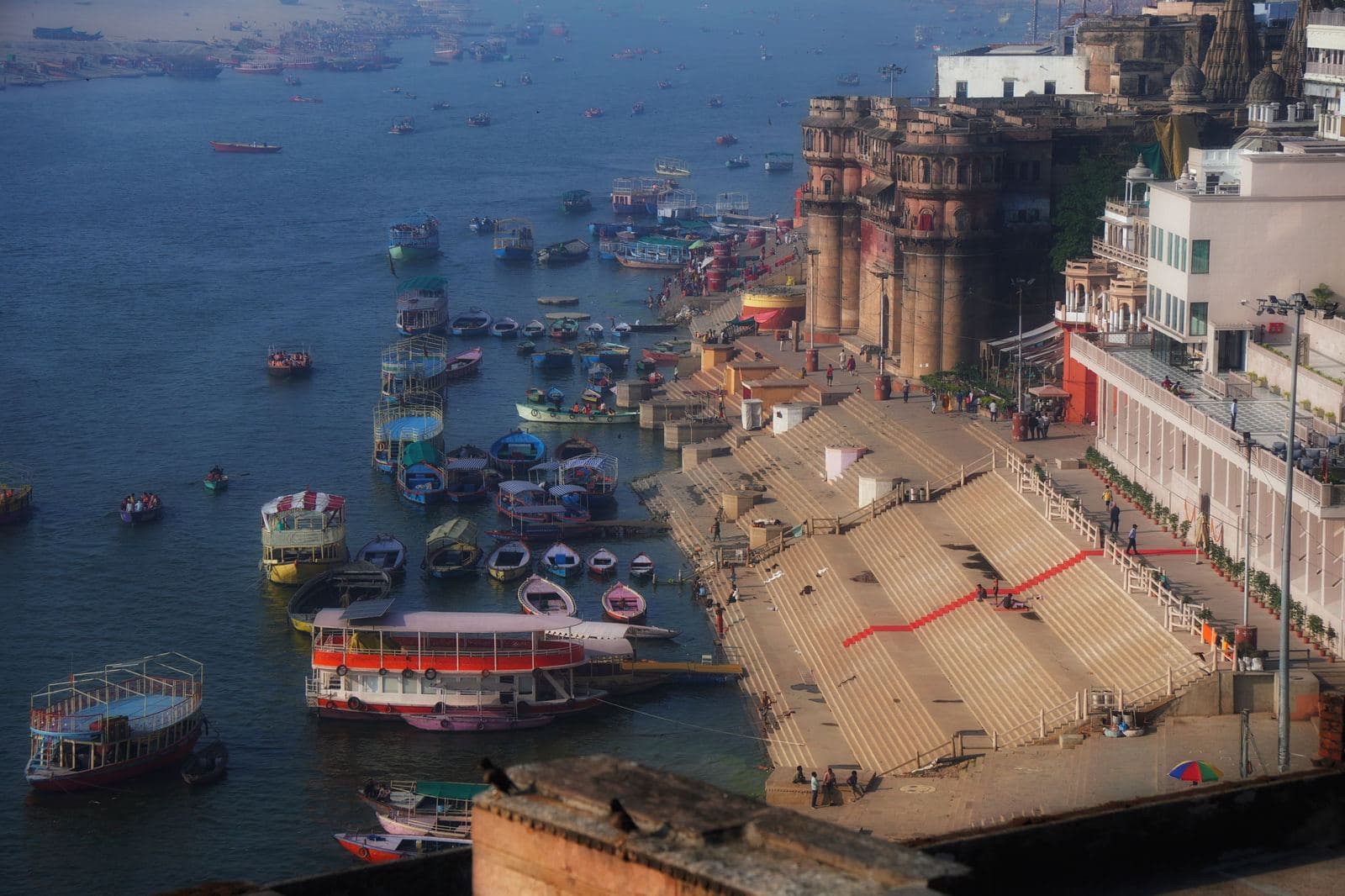
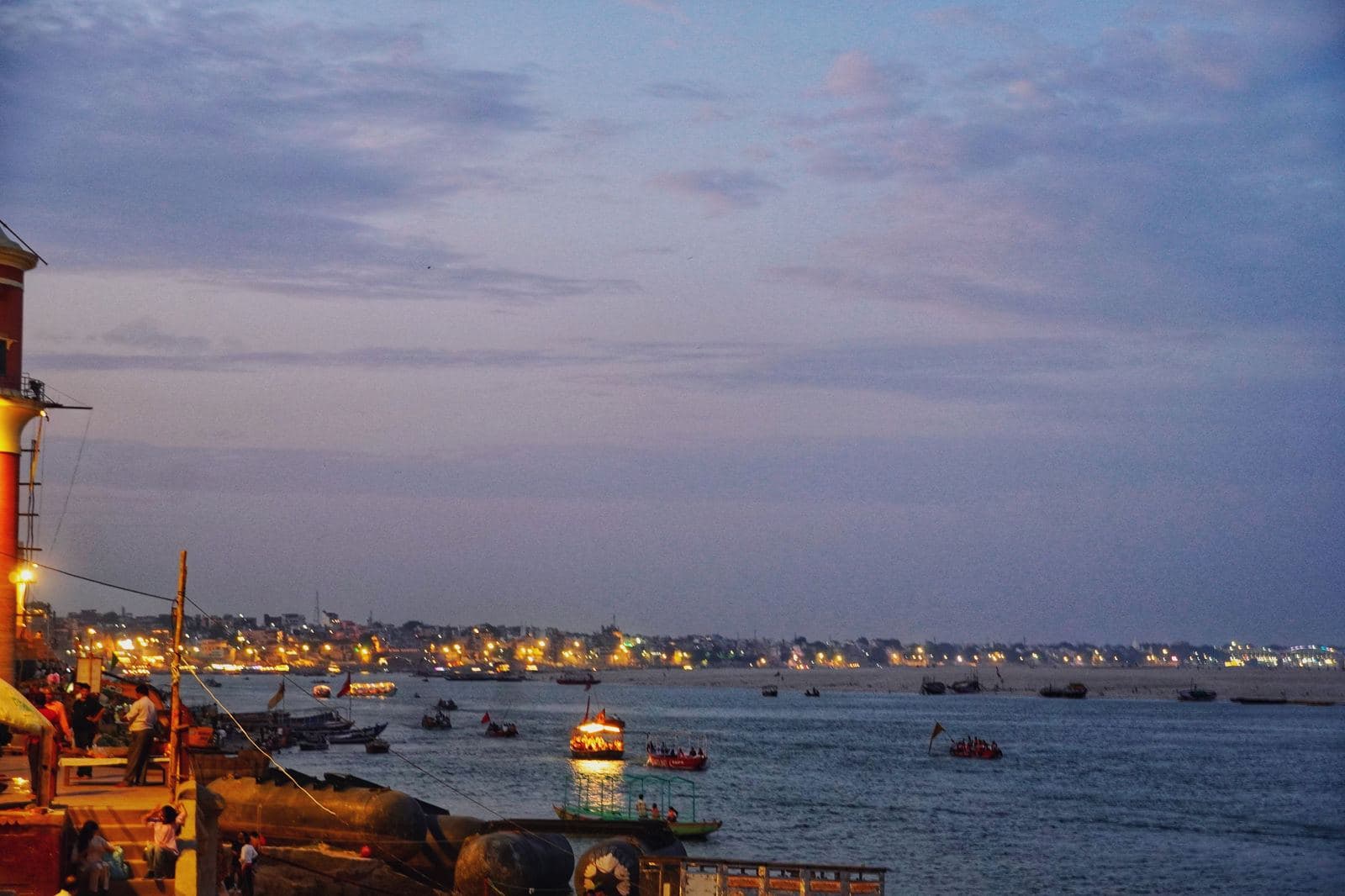
By October the monsoon water has drawn back from the steps and left them freshly washed, the air has cleared, and the city turns to its busiest run of festivals. Navratri and Dussehra fall in October; on the far bank, the Ramnagar Ramlila, staged in the open air across the town for about a month around Dussehra, is one of the oldest theatrical traditions in India. Diwali falls on 8 November 2026, and Chhath, when families stand in the river to offer prayers to the setting and rising sun, follows about a week later.
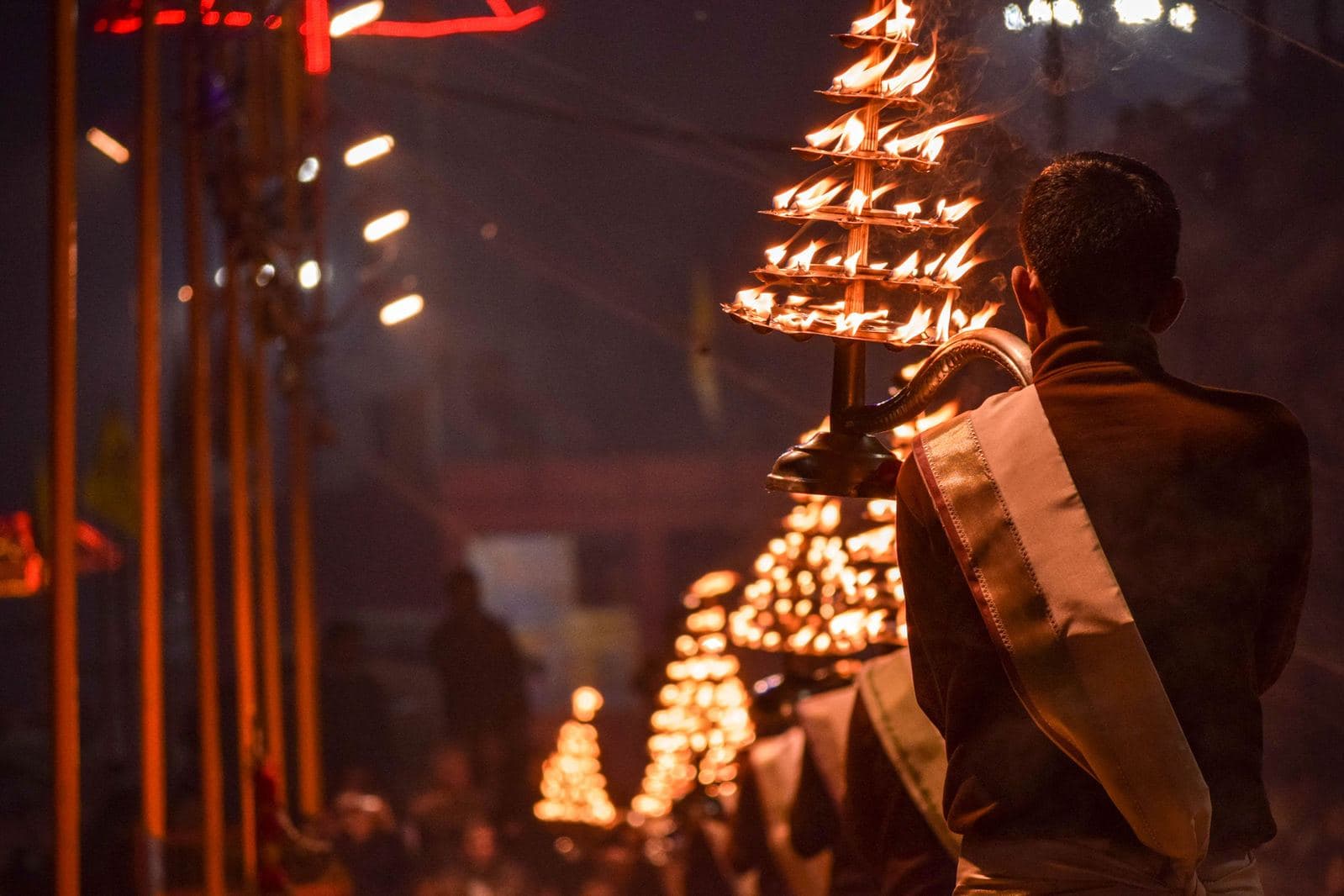
Then comes the night the year builds towards: Dev Deepawali, on Kartik Purnima, 24 November 2026, when lakhs of lamps are lit along all 84 ghats. November is also simply the most pleasant month to be in Varanasi: days near 29°C, cool evenings, and almost no rain. Prices and crowds reflect it, so book early.
December and January: fog, fires and malaiyo
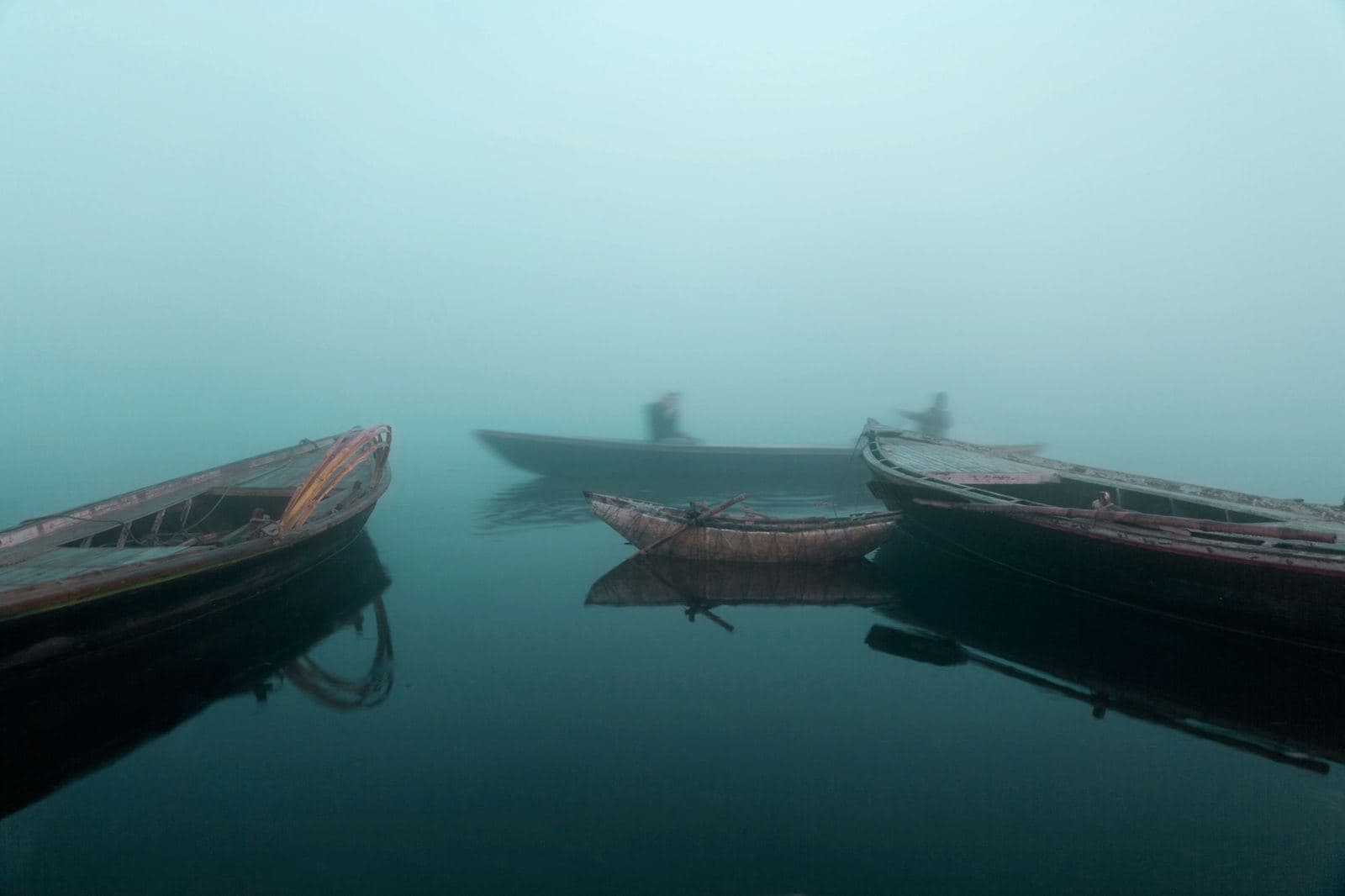
Winter is short but real. Days are sunny and around 22 to 25°C, but nights fall to about 9 to 11°C, and on the river at dawn it feels colder. From late December, fog often lies thick on the Ganga in the early morning, which makes for some of the most beautiful sunrise boat rides of the year: the far bank disappears and the boats come out of the white. On the ghats, people warm themselves at small fires, and in the lanes this is the season of malaiyo, a saffron-scented milk foam that is set overnight in the cold and sold only on winter mornings.
Makar Sankranti, in mid-January, brings a great dawn bath and a sky full of kites. It is a good time for travellers who like a crisp morning and fewer people than November.
February and March: the second sweet spot
February is November's equal: clear skies, warm days around 27°C and cool nights, with the fog gone. Mahashivratri, the great night of Shiva, falls in February or March and is one of the most important days in Kashi, when the queues for Kashi Vishwanath stretch for hours. In 2027 it is expected around 6 March.
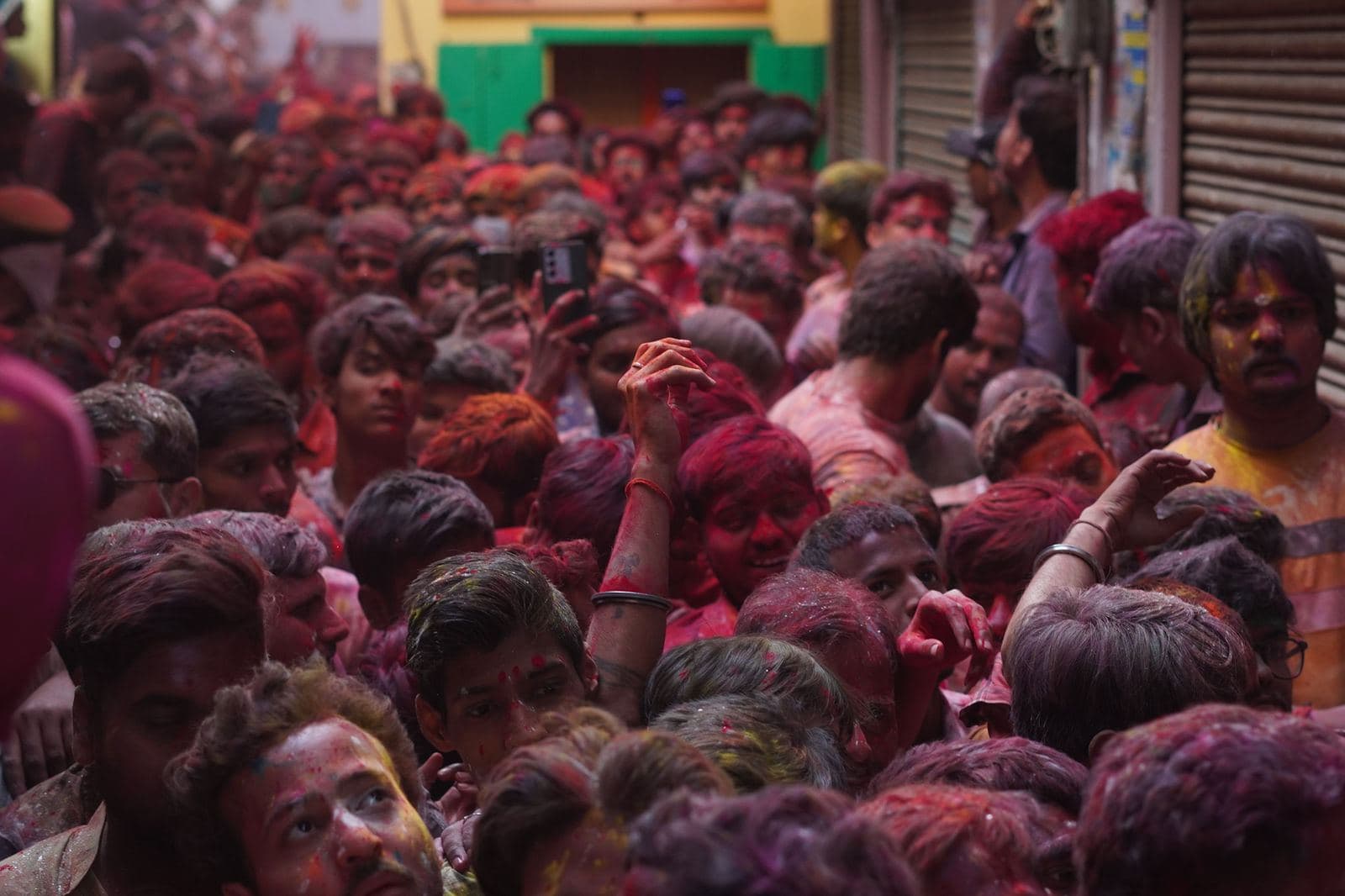
March warms quickly, passing 30°C, and brings Holi, expected on 22 March 2027. Varanasi celebrates it with enormous energy, and in the days before, the city is famous for Masan Holi, played with ash at the cremation ghats. It is a joyous time but a chaotic one; wear clothes you can throw away, keep your phone in a sealed bag and, if it is your first Holi, spend it with someone local.
April to June: the hot season
From April, the heat climbs fast. May is the hottest month, with average highs around 41°C, and heatwaves can push well beyond that. The afternoon wind, the loo, is hot and dry. This is the hardest season to travel, but not an impossible one: the ghats are at their quietest, hotels are at their cheapest, and the river at dawn is still lovely. If you come, live the way the city does, out at first light and after sunset, indoors from late morning to late afternoon.
April has one great reason to visit: the Sankat Mochan Sangeet Samaroh, a free festival of Indian classical music held over several nights at the Sankat Mochan temple, where some of the greatest musicians in the country play through the night.
July to September: the monsoon
The rains arrive in late June. July and August are the wettest months, each with around 300 mm of rain, and as the Ganga swells with water from the hills, it climbs the steps. In a heavy year it covers the lower ghats completely and cuts off the walk along the riverfront; boat services are then suspended for safety, sometimes for weeks, as they were in August 2024. The evening Aarti moves to rooftops or higher steps.
And yet this is also the month of Shravan, sacred to Shiva, when lakhs of pilgrims carry Ganga water to the temples and Mondays at Kashi Vishwanath are among the busiest days of the year. It is a deeply devotional season, green and humid, but it is not the time for a first visit built around the river.
So when should you go?
- Comfortable weather for a first visit
- November or February
- Dev Deepawali and the lamps
- 24 November 2026
- Fog on the river and winter food
- Late December to January
- Fewer people, lower prices
- Early October or March
- Classical music
- April, for the Sankat Mochan festival
- Devotion at its most intense
- Shravan (July to August) or Mahashivratri
| If you want | Go in |
|---|---|
| Comfortable weather for a first visit | November or February |
| Dev Deepawali and the lamps | 24 November 2026 |
| Fog on the river and winter food | Late December to January |
| Fewer people, lower prices | Early October or March |
| Classical music | April, for the Sankat Mochan festival |
| Devotion at its most intense | Shravan (July to August) or Mahashivratri |
However you choose, give the city enough time. Read our guide to how many days to spend in Varanasi before you book, and if you would like the season planned around you, our Kashi in Four Days journey runs from October to March.
Questions people ask
- Which is the best month to visit Varanasi?
- November and February. Both are dry and mild, with days around 27 to 29°C. November also has Diwali and Dev Deepawali.
- Is Varanasi too cold in December and January?
- Days are pleasant, around 22 to 25°C, but nights fall to about 9 to 11°C and dawn on the river is cold and often foggy. Bring a warm layer.
- Can you take a boat ride in Varanasi during the monsoon?
- Often not. When the Ganga rises between July and September, boat services are suspended for safety, sometimes for weeks.
- When is it too hot to visit Varanasi?
- May and June, when average highs are around 39 to 41°C and heatwaves go higher. If you go, sightsee at dawn and after sunset.
- When is Dev Deepawali in 2026?
- Tuesday 24 November 2026, on Kartik Purnima, about two weeks after Diwali on 8 November.

About this guide
Written for the WanderMate Journal by our team in Varanasi, where we plan and run journeys along the Ganga. We check facts against official and published sources, listed below, and revise guides when timings, prices or dates change. Last updated 14 October 2026.
Spotted something out of date? Tell us.
Sources